Keynote Speakers

Every year we invite leading experts to share their perspective on the frontiers of computational fluid dynamics and particle-based methods. This year’s keynote lectures reflect both the growing overlap between SPH and mainstream CFD, and the expanding reach of numerical methods more broadly: from the fundamental challenges of multispecies turbulent flow simulations, to the new opportunities opened by exascale computing for SPH in computational astrophysics, to the continued evolution of the δ-SPH scheme family in tackling complex free-surface and multiphase flow problems — the latter presented by this year’s Monaghan Prize recipient.
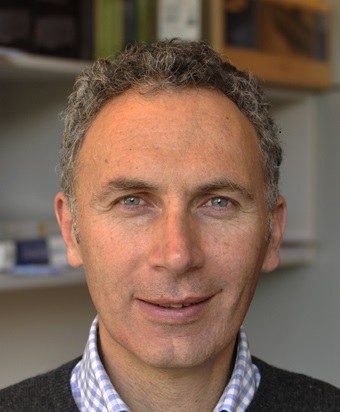
Prof. Roberto Verzicco

Gran Sasso Science Institute, L'Aquila, Italy

Title
Multispecies turbulent flow simulations, challenges and open questions

CV
Roberto Verzicco is an internationally recognized expert in fluid dynamics, with more than 300 papers published in peer-reviewed scientific journals. His publication record includes articles in leading journals such as Nature Physics, PNAS, Physical Review Letters, Journal of Fluid Mechanics, Physics of Fluids, Physical Review Fluids, and Journal of Computational Physics, as well as review and perspective articles in major venues including the Annual Review of Fluid Mechanics and the Journal of Fluid Mechanics. He also contributed the entry on Fluidodinamica to the prestigious Enciclopedia Treccani XXI Secolo.
His research is characterized by a strong integration of numerical simulations, laboratory experiments, and theoretical analysis, carried out both within his research group and through an extensive international network of collaborations. Rather than being method-driven, his work is primarily physics- and application-oriented, often requiring the integration of concepts and tools from different disciplines. This approach has led to fruitful collaborations in fields such as physics, mathematics, medicine, biology, and computer science. Although most of his research is rooted in fundamental science, it is often pursued with a clear application perspective.

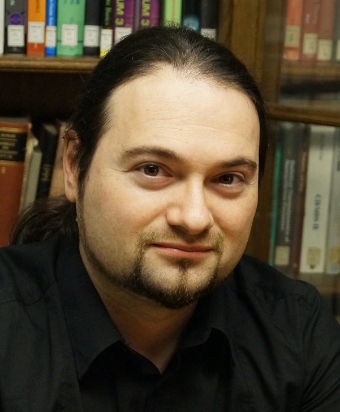
Prof. Rubén Cabezón

Center for Scientific Computing, University of Basel, Basel, Switzerland

Title
SPH in the Exascale Era: New Opportunities for Computational Astrophysics

CV
Dr. Ruben Cabezon is a senior researcher at the Center for Scientific Computing (sciCORE) of the University of Basel, Switzerland. He received his PhD in Computational Physics from the Polytechnic University of Catalonia in 2010, after completing his degree in Physics at the University of Barcelona. After his PhD, he moved to the University of Basel, where he worked in computational and theoretical astrophysics before joining sciCORE in 2016. His research lies at the intersection of computational astrophysics and high performance computing, with a focus on advanced Smoothed Particle Hydrodynamics (SPH) methods for large-scale simulations of complex astrophysical flows. Dr. Cabezon is Co-Principal Investigator of the SPH-EXA and SPH-EXA2 projects, funded by the Swiss Platform for Advanced Scientific Computing, which bring together astrophysics, cosmology, and computer science to develop a scalable hydrodynamics and self-gravity solver for exascale architectures. He has made major contributions to modern SPH methodology, including an integral approach for calculating derivatives, improved interpolation kernels, and accurate density-based formulations for astrophysical applications. In 2023, Dr. Cabezon and collaborators were awarded one of the largest European supercomputing allocations to date, with 22 million GPU hours on LUMI-G through the EuroHPC Extreme Scale Access programme, to study the role of turbulence and self-gravity in the formation of pre-stellar cores. His broader scientific contributions include simulations of Type Ia and core-collapse supernovae, white-dwarf collisions, nuclear-reaction networks, neutrino transport, neutron-star mergers, and sub-stellar engulfments events.

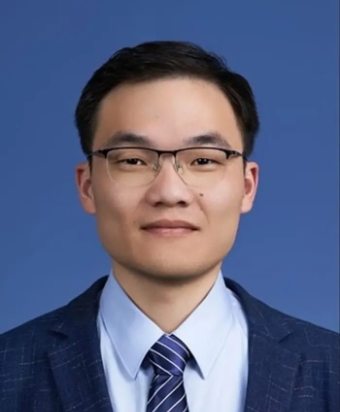
Prof. PengNan Sun

Sun Yat-sen University, Zhuhai, China

Title
The δ-SPH Scheme Family: Evolution and Advances in Addressing Complex Free-Surface and Multiphase Flow Challenges

CV
PengNan Sun is an associate professor at Sun Yat-sen University (SYSU), where he also serves as the director of the Ocean-Connect Supercomputing Center. He obtained his doctoral degree from Harbin Engineering University in 2018. From 2013 to 2015, he worked at CNR-INM in Rome, Italy. After that, he conducted postdoctoral research at École Centrale de Nantes in France from 2018 to 2020. His research focuses on the development of meshfree numerical methods, particularly Smoothed Particle Hydrodynamics (SPH), and the application of these methods in developing CAE software to solve complex fluid-structure interaction issues. Dr. Sun has received several academic awards, including the 2025 Jeo Monaghan Prize, 2022 EABE Best Paper Award, the 2020 SPHERIC Online Best Presentation Award, and so on. He is a member of the steering committee of SPHERIC. In this capacity, he chaired the 2024 SPHERIC Zhuhai International Workshop held in SYSU.